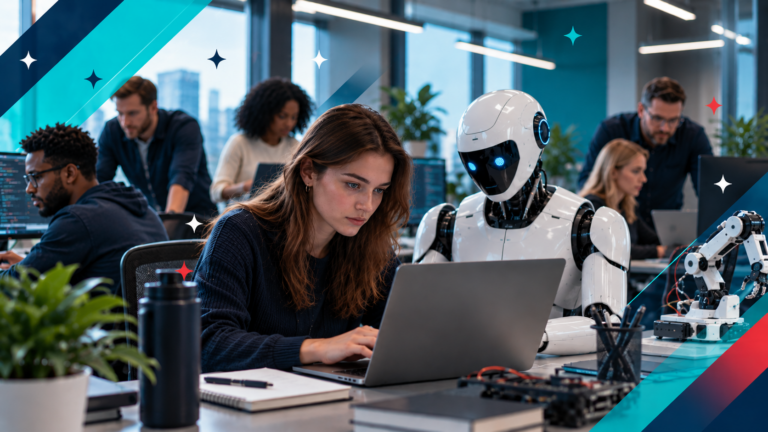
¿Una máquina puede leer todo internet, pasar exámenes, escribir código y aún así carecer de algo que tiene tu abuelo?
La IA puede analizar enormes cantidades de datos, generar respuestas en segundos y sonar impresionantemente segura mientras lo hace. Los estudios demuestran puede reducir el tiempo de realización de las tareas hasta en un 80%, convirtiendo trabajos que antes tomaban horas en solo minutos. Eso es inteligencia. Pero la sabiduría es otra cosa. La sabiduría proviene de la experiencia, de años de ver lo que funciona, lo que falla y cuándo una decisión que parece buena sobre el papel es en realidad una idea terrible.
Tu abuelo quizás no sepa entrenar una red neuronal… pero puede entrar en una habitación, escuchar una conversación durante dos minutos y saber exactamente en quién no confiar, y ningún conjunto de datos puede enseñar eso.
La IA puede procesar información. Pero no ha vivido una vida.
Este blog explora lo que la IA todavía no puede hacer y por qué los humanos deben seguir aprendiendo en la era de la IA.
Cómo las empresas y las personas usan la IA
La IA es parte de la vida cotidiana. Las personas la utilizan para escribir correos electrónicos, generar ideas, resumir documentos y analizar datos en el tiempo que se tarda en tomar un sorbo de café. También puede hacer cosas que habrían sonado a ciencia ficción hace apenas unos años: generar imágenes y videos realistas, escribir código de software, traducir conversaciones en tiempo real e incluso ayudar a los médicos a analizar escáneres médicos.
Muchos profesionales recurren ahora a la IA de la misma manera que antes recurrían a Google: como el primer lugar al que acuden cuando necesitan información, ideas o ayuda para resolver un problema.
Las empresas lo están adoptando igual de rápido. Casi 80% de las organizaciones utilizan ya la IA en al menos una función empresarialLa IA ayuda a las empresas a trabajar más rápido, automatizar tareas repetitivas y descubrir información oculta en enormes cantidades de datos.
En muchos sentidos, la IA se está convirtiendo en la herramienta de productividad definitiva: un poderoso asistente que ayuda a las personas a hacer más en menos tiempo. Y sus capacidades continúan evolucionando a un ritmo increíble.
Pero, ¿qué no puede hacer la IA?
¿Alguna vez te has encontrado pensando: "A este paso... ¿qué no puede hacer la IA?"
Da un indicio y produce algo que a menudo parece impresionantemente correcto. Pero si miras un poco más de cerca, empiezan a aparecer algunas grietas interesantes. La IA puede darte respuestas, pero no sabe cuándo la pregunta en sí está mal, por ahora.
Pregúntale cómo optimizar un producto que nadie quiere realmente, y con gusto producirá gráficos, estrategias y planes de acción. Un humano con experiencia podría hacer una pausa y decir: "¿Espera... deberíamos estar construyendo esto?"
Por ahora, la IA puede detectar patrones, pero no comprende realmente por qué las personas se comportan como lo hacen. Puede analizar miles de reseñas de clientes, pero aún así podría pasar por alto la sutil razón emocional por la que los clientes aman u odian algo.
La IA puede generar texto increíblemente convincente, pero no puede saber cuándo algo es técnicamente correcto pero prácticamente desastroso. Cualquiera que haya seguido las indicaciones del GPS directamente a un camino sin salida conoce la diferencia entre tener información y tener juicio.
Y quizás lo más importante, la IA no comprende realmente lo que importa, al menos todavía. No le importan las consecuencias, la ética, el impacto a largo plazo o la compleja complejidad de la vida humana.
Sabiduría artificial vs. humana: No es lo mismo
La IA es increíblemente inteligente. Algunos sistemas ya funcionan a niveles comparables a los de profesionales altamente cualificados. Por ejemplo, ChatGPT obtuvo una puntuación que lo situó entre los 101 mejores candidatos del examen de acceso a la abogacía de Estados Unidosel examen de licencia profesional para abogados.
Pero aprobar un examen no significa comprender el mundo. La inteligencia consiste en saber cosas. La sabiduría consiste en saber qué hacer con ellas.
Imagina preguntarle a una IA si una empresa debería lanzar un producto. Puede analizar informes de mercado, resumir los comentarios de los clientes y producir una estrategia detallada. Pero no siente la incertidumbre de arriesgar millones de dólares. No percibe cuándo cambia el estado de ánimo del mercado. No sabe cuándo una decisión que parece perfecta en una hoja de cálculo podría dañar una marca o decepcionar a los clientes.
Los humanos desarrollan ese sentido con el tiempo, a través de la experiencia, los errores, las conversaciones y las consecuencias. Es el tipo de perspicacia que un gerente experimentado, un emprendedor o, sí, incluso un abuelo podría tener cuando simplemente dice: "Algo sobre esto no me da buena espina".
La IA puede leer Internet entero. Pero la sabiduría proviene de vivir en el mundo.
Y existe otra ilusión sutil. A veces, la IA puede parecer sorprendentemente genuina, como si realmente te entendiera. Le cuentas sobre un día difícil en el trabajo y responde como un colega atento o incluso como un psicólogo. Dice las cosas correctas, hace preguntas útiles y parece empática. Pero detrás de todo eso todavía hay código.
La IA no siente frustración, presión o decepción. No se ha quedado despierta preocupándose por una decisión ni ha experimentado las consecuencias de estar equivocada. Es extremadamente buena reconociendo patrones en el lenguaje humano, incluyendo cómo se expresa la empatía, pero en realidad no vive esas emociones.
Esa diferencia puede ser invisible en una conversación. Pero es exactamente donde termina la inteligencia y comienza la sabiduría.
Wawiwa Tech: Por qué los instructores humanos son importantes
Wawiwa es un proveedor global de educación tecnológica que ofrece Programas de reciclaje a prueba de IA y cursos de perfeccionamiento adaptados a las últimas tendencias del sector.
En Wawiwa, la IA se integra en la experiencia de aprendizaje, ayudando a los estudiantes a practicar más rápido, explorar ideas y trabajar con las mismas herramientas utilizadas en la industria tecnológica. Al mismo tiempo, enseñamos IA, equipando a los alumnos con las habilidades para comprenderla, aplicarla y trabajar junto a ella en roles del mundo real, como Desarrollador AI Full-Stack, Analista de datos de IAy Jefe de producto de IA.
Pero aquí es exactamente donde muchos programas de capacitación se equivocan. Porque si bien la IA es poderosa, no puede reemplazar la orientación humana.
Es por eso que un componente central de Wawiwa es Metodología JET Design son sus formadores experimentados. Son profesionales de la industria que aportan conocimientos y perspectiva. Han tomado decisiones, enfrentado desafíos, trabajado en entornos reales y comprenden los matices que ninguna herramienta puede explicar por completo.
¿El resultado? Más del 70% de los graduados de Wawiwa consiguen un empleo tecnológico en los 2 meses siguientes a su graduación – porque aprenden herramientas y porque obtienen habilidades del mundo real, orientación y confianza.
En un mundo donde la información está por todas partes, lo que los estudiantes realmente necesitan es dirección, criterio y percepción del mundo real.
Y eso es algo que solo los humanos pueden transmitir, al menos por ahora.