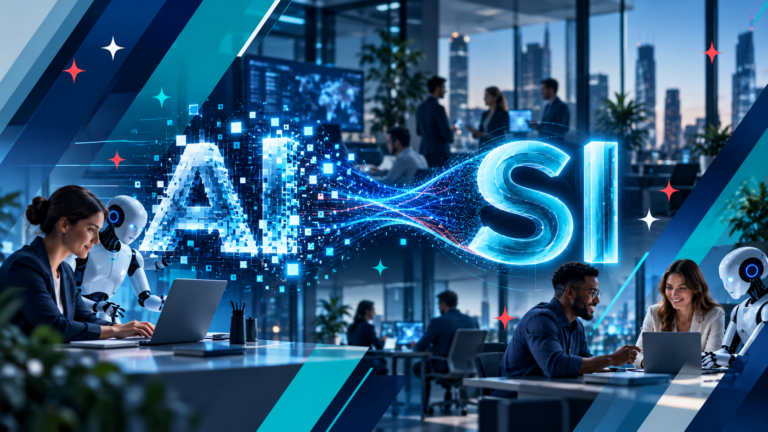
The student’s homework looked solid. The submissions looked polished. Yet a quick glance revealed an awkward truth: AI could have produced nearly all of it. For educators, this is a strategic risk. If homework assignments can be completed by AI without human work, grades stop signaling knowledge, application, or employability.
Nowadays, employers are hiring for problem framing, judgment, collaboration, and responsible use of AI tools. According to the World Economic Forum, analytical thinking remains the top core skill for employers, with seven out of ten companies considering it essential. Analytical thinking remains the top core skill, alongside creative thinking and tech literacy. Traditional assignments centered on final outputs do not surface these skills.
The implication is clear. If AI can generate the answers to a homework assignment, educators need to rethink what they value and grade. The focus should shift to what only students can do, for now: define the problem, design the approach, direct the AI, verify the evidence, and communicate the rationale. This blog offers a practical blueprint for leaders in higher education, continuing education, and workforce development who want student work to provide a stronger signal of job readiness in the AI era.
Why Traditional Homework Assignments Fail in an AI-First Classroom
Grading only the final product ignores the process behind creating it. Two students can submit identical reports. One may have scoped the problem, engaged stakeholders, selected data responsibly, iterated prompts, validated outputs, and translated findings for decision-makers. The other pasted a prompt into an AI tool and accepted the first suggested generation from the chat.
Real jobs reward the first student. Traditional grading may treat both students the same. That gap is now a brand risk for programs that promise workforce alignment. Employers increasingly expect graduates to show the work: their decisions, their checks, and how they made AI safer and smarter for the task at hand.
The fix is not to “ban AI.” It is to design assignments where AI is expected, used responsibly, and documented transparently.
And you might ask: if employers just want the work done, why should they care which student produced it and how? Because in the workplace, AI does not remove the need for judgment. Employees still need to spot mistakes, question weak outputs, protect sensitive information, adapt the work to the business context, and know when AI should not be trusted. The employee who can do that is far more valuable than someone who simply knows how to generate a fast answer.
One professor caught 32 out of 35 students using AI on an exam after embedding a hidden instruction in white text telling chatbots to include the word “Madagascar.” Students who copied the question directly into AI tools submitted answers with the completely irrelevant word, revealing that they had not properly read or reviewed the AI-generated responses.
What Employers Need Students to Demonstrate in the AI Era
Across functions like marketing, HR, finance, operations, and customer service, AI assistants are changing how work gets done. Microsoft’s Work Trend Index highlights the rise of human-agent teams and the imperative to redesign work so people and AI systems complement each other. Human-agent teams are shaping how work gets done. In this context, graduates need to show:
- Problem framing: Clarifying goals, constraints, and stakeholders.
- Prompt and tool strategy: Choosing the right AI, structuring effective prompts, and chaining tasks.
- Evidence standards: Verifying claims, citing sources, and testing outputs against ground truth.
- Ethics and governance: Documenting data use, bias checks, and privacy considerations.
- Iteration and reflection: Improving results through cycles and explaining trade-offs.
- Communication: Translating insights into decisions for non-technical audiences.
- Collaboration: Coordinating human work with AI outputs inside workflows.
For data-centric roles, that includes interpreting charts and communicating uncertainty. Programs that prepare people for junior analytics roles should test these practical capabilities alongside AI use, as in an AI Data Analyst pathway.
Principles For AI-Native Homework Assignment Design
To move from grading answers to evaluating ability, anchor assignments in these design principles:
Grade the process, not just the product: Require an AI usage statement that includes the objective, prompts used, iterations attempted, tools selected, and reasons for rejection or acceptance of outputs. Treat the usage statement as part of the grade.
Require evidence and repeatable results: Ask students to submit citations, screenshots, logs, or version history that demonstrate verification steps. Make reproducibility a requirement: could another student follow the same steps and achieve similar results?
Grade judgment and trade-offs: Include criteria for when to accept AI output, when to escalate to a human, and how to resolve conflicts between AI suggestions and domain knowledge.
Evaluate communication in context: Ask students to deliver a concise executive readout that translates their work into decisions, risks, and next steps for a specific stakeholder, such as a marketing lead or HR partner.
Simulate real-world constraints: Introduce incomplete data, changing requirements, or compliance rules during the assignment. Grade how students adapt plans, prompts, and deliverables.
Encourage responsible collaboration: Allow peer review on prompts and verification plans but require individual reflection on what changed and why.
These principles make the invisible visible and reward the human skills employers value.
Practical Assignment Formats That Work with AI
Changing the format of student work can make AI-native grading simpler to implement and scale.
Live performance tasks with an AI audit trail: In a 60-minute session, students tackle a defined problem with access to approved AI tools. They submit the final output plus their prompts, iterations, and verification notes. Faculty grade the outcome and the audit trail. For implementation-focused roles, performance tasks align well with the hands-on work expected in programs like an Enterprise AI Implementation Specialist.
Oral defenses and client briefings: After submitting an AI-assisted deliverable, students present a 5-minute briefing and answer questions about method, evidence, risks, and next steps. Oral defenses surface independent thinking and reduce over-reliance on AI phrasing.
Comparative critiques: Give students three AI-generated drafts of a campaign plan, policy memo, or data summary. Ask them to critique strengths and risks, then submit a revised version with a clear rationale and supporting evidence. This tests judgment and editing skills.
Activities to find AI bias and errors: Provide an AI output with embedded inaccuracies, policy risks, or gaps. Students must find and fix each issue, explain the risk, and propose a mitigation procedure the team could adopt.
Connecting Student Work To Business Value in the AI Era
AI is reshaping where value is created across functions. McKinsey reports that sales and marketing account for 28% of the total potential economic value from generative AI, with software engineering close behind. Sales and marketing account for 28 percent of potential value from gen AI. This makes a strong case for designing student work that reflects how these teams actually work with AI.
In marketing programs, for instance, educators can grade how students structure prompts to target segments and enforce brand voice. In operations, check for continuous improvement by having students use AI to document a process, identify a bottleneck, run a pilot fix, and report measurable impact. In customer service, evaluate students’ ability to design a human-in-the-loop escalation plan that balances speed, accuracy, and empathy.
In all cases, the student work should connect to a business outcome that an entry-level employee can influence, such as improved response time, clearer reporting, or a more robust handoff between teams.
Implementation Tips for Colleges and AI Workforce Programs
Leaders can act now without overhauling entire curricula.
Start with AI usage statements: Require them wherever AI is permitted. Provide a simple template that asks for the objective, prompts, iterations, tools, citations, and verification steps.
Add oral checkpoints: Replace a small portion of written work with short defenses or standups. This lightens grading while elevating authenticity.
Pilot one performance task per course: Choose a high-impact skill for each course and design a live task with a clear rubric, focusing on process and evidence.
Build a shared prompt and verification library: Encourage faculty to collect tried-and-true prompts and common failure modes so students learn how to spot and fix typical errors.
Align with stackable pathways: Make sure assignments and grading criteria show progression toward job-ready skills, not just course completion. For institutions building career pathways, see how stackable, employer-aligned options can fit your degree or continuing education model through job-ready programs at your college.
AI may be able to do the assignment. That is not a problem to hide. It is an opportunity to rethink what educators grade and what student work should demonstrate. Focus on how students define problems, guide AI, verify evidence, and communicate decisions. Grade both the process and the final product, and connect rubrics to workplace tasks and measurable outcomes. When you do, grades become more meaningful, graduates can demonstrate stronger job-ready skills, and employers gain greater confidence in what those grades represent.
How Wawiwa Helps Skill AI-Ready Professionals
Wawiwa is a global education provider that supports colleges, universities, and training centers across the U.S. and around the world with education solutions built for the AI era. Our programs use live instructor-led education, hands-on projects, and our JET Design™ methodology to align curriculum and student work with workplace performance. If your institution is ready to shift from answer-getting to capability-building, let’s design AI-native homework assignments that prepare people for job-ready roles.
AI is a tool, not a substitute for thinking. AI should be used. But using AI does not mean relying on it blindly. People still need to question the output, check it, understand it, and make it their own.