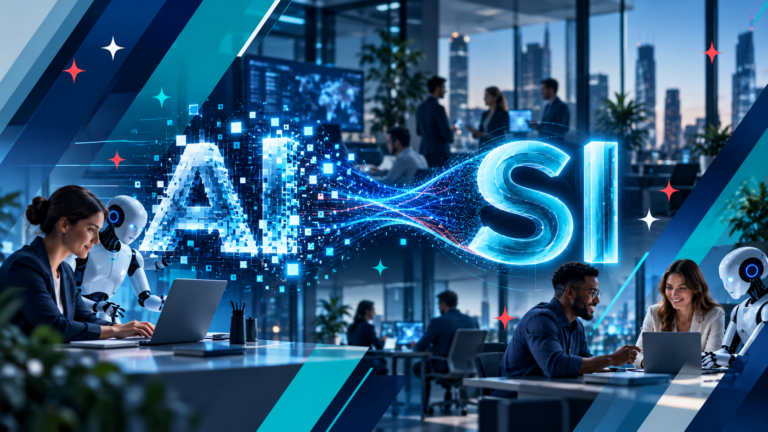
Every week, new reports highlight how fast roles are changing, how junior positions are disappearing, and how AI is rewriting job descriptions before learners even graduate. In a CNBC survey, 67% of HR leaders said AI is already transforming jobs by automating tasks and changing daily workflows and that AI’s impact is set to accelerate. Traditional curricula feel more outdated than ever. Employers expect AI-fluent talent. And students put their trust in universities and colleges that currently prepare them for jobs that won’t exist next year.
Educational institutions are now facing a crucial decision: what changes they should make to prepare learners for the job market in the AI era.
This blog explores how universities can future-proof graduates’ careers in the age of AI.
AI is Reshaping Roles Faster than Education Can Keep Up
AI is reshaping how people work and how companies hire. For educational institutions responsible for preparing future talent, the urgency has never been higher.
Traditional degrees weren’t built for a world where jobs change every year, where tasks are automated, and junior roles are the first to face elimination. Employers today expect graduates to come equipped with AI skills from day one. Employees who use AI are already saving up to 7.5 hours per week, so it’s clear that the efficiency gap between AI-ready talent and everyone else is widening quickly.
Universities operate in structured, highly regulated systems – with degree requirements, accreditation processes, faculty approvals, and curriculum cycles that often take years to update. This worked when technology evolved slower. But today, AI is moving at record speed, reshaping roles and workflows faster than degrees can formally adapt. Even the most forward-thinking educational institutions struggle to keep pace because the system itself wasn’t built for continuous, rapid change. This growing gap makes it harder than ever for learners to graduate with skills that truly match the demands of an AI-driven job market.
How Education Providers Can Keep Their Degrees Relevant in an AI-Driven World
Preparing learners for the future requires a mindset shift. AI is now embedded in how companies operate, hire, and measure productivity. If universities want to stay competitive, they need to catch up as quickly as possible and shorten the gap between education and industry. Below are practical, high-impact tips to future-proof any tech curriculum and ensure graduates stay relevant, employable, and AI-ready.
Integrate AI into Every Degree
AI shouldn’t be an “extra topic” – it should run through the entire learning journey. Students must learn how workflows change when AI tools are available, because in real jobs, they will use them. Teaching them to do everything manually, without AI, is like teaching someone to drive without ever letting them use GPS. But just like GPS, learners must also understand the fundamentals – because technology can fail. They need both the traditional skill and the AI-accelerated version.
Add AI Tools like Chatbots, Copilots, and Automation Assistants
To build true fluency, learners need hands-on practice with tools: AI chatbots, code copilots, content generators, data analysis models, and more. If students don’t learn with AI in the classroom, they won’t know how to use it confidently at work. Embedding these tools in assignments normalizes AI-driven problem solving and boosts independence, critical thinking, and speed.
Adopt AI in Your Own Daily Academic Workflow
Future-proofing starts internally. Universities must model the behavior they expect from learners. Encourage students to use AI rather than prevent its usage. When AI becomes part of your internal workflow, it becomes easier – and more authentic – to integrate it into your programs.
Align Degrees with Jobs that are Still Relevant and Growing
Before designing a degree, ask: Is this job still needed – or is it one of the roles disappearing fastest? For example, traditional print journalism degrees are becoming far less relevant, as many of the tasks they train students for – reporting, editing, headline writing – are now heavily supported or automated by AI. Instead, focus on degrees where AI augments rather than replaces human work: AI Full-Stack Development, AI Data Analysis, and AI Product Management. Aligning your degrees with real labor-market needs protects your learners’ long-term employability.
Make Sure Your Courseware Stays Up-to-Date
AI evolves monthly, sometimes weekly. Your curriculum should, too. Regularly review new tools, frameworks, coding assistants, automation platforms, and industry expectations. Be sure your courseware provider is up-to-date – this ensures your degrees remain credible, relevant, and industry-aligned. And if you don’t work with a courseware provider, make sure you frequently update your own materials to prepare learners for the realities of an AI-driven workforce.
Teach “AI Literacy” as a Core Employability Skill
Students need to know how to:
- Evaluate AI outputs
- Prompt effectively
- Check for bias or errors
- Collaborate ethically with AI
This foundational skill now matters across every tech profession.
Forward-thinking universities around the world are already adapting. Institutions like Greystone College in Canada and New European College in Germany stay ahead by partnering with a courseware provider that continuously refreshes and upgrades their materials. Their learners benefit from AI-ready content, new tools, and hands-on assignments that reflect real workforce demands, keeping both the institution and its graduates competitive in an AI-driven world.
“AI is reshaping how businesses work – and what they expect from graduates. The market rewards people who can actually do things: build solutions, read and interpret data, and use AI naturally in their daily work. At New European College, we design our programs around real business practice, not theory for theory’s sake. Through hands-on projects and real company cases, our students develop skills that translate directly into employability and career momentum. That’s why I’m particularly proud of our cooperation with Wawiwa Tech: together, we offer programs that genuinely prepare our students for the way companies operate.”
– Sascha Liebhardt , Chancellor at New European College
“Wawiwa brings established global expertise in tech education, through its proven JET (Job‑Effective Training) Design™ methodology. This aligns closely with Greystone’s practical, hands‑on teaching approach and focus on employability. Together, we enable learners – even those without prior tech experience – to reskill into roles such as Full-Stack Developer and Data Analyst within 6-9 months, reinforcing our shared commitment to fast, career-oriented outcomes.”
– Brad Johnson, Director of Programs at Greystone College
AI Everywhere at Wawiwa
Wawiwa is a global tech education provider, offering AI-proof reskilling programs and upskilling courses tailored to the latest industry trends.
We incorporate AI everywhere we can – into all our training offerings, teaching methods, and internal processes – to keep up with industry trends and meet the ever-changing demands of our partners and students around the world.
In response to the rapid transformation of tech roles, we’ve launched dedicated reskilling programs that prepare learners to become AI Data Analysts and AI Full-Stack Developers – two of the fastest-growing, AI-augmented professions in the job market. We also offer a range of AI upskilling courses for professionals who want to integrate AI into their daily workflows and enhance productivity, creativity, and decision-making in their current roles.
Wawiwa partners around the world – universities and training centers – deliver AI training with hands-on experience, real-world examples, and ready-to-use learning materials that we create with AI and tailor to their local ecosystem and branding.
At Wawiwa, our end goal is simple: employability – and it works. Over 70% of our graduates land a tech job within two months of graduation. Many companies actively visit Wawiwa’s partner training centers and universities to meet and recruit talent directly on campus, giving students the chance to network, showcase their skills, and even secure job offers before finishing their program.