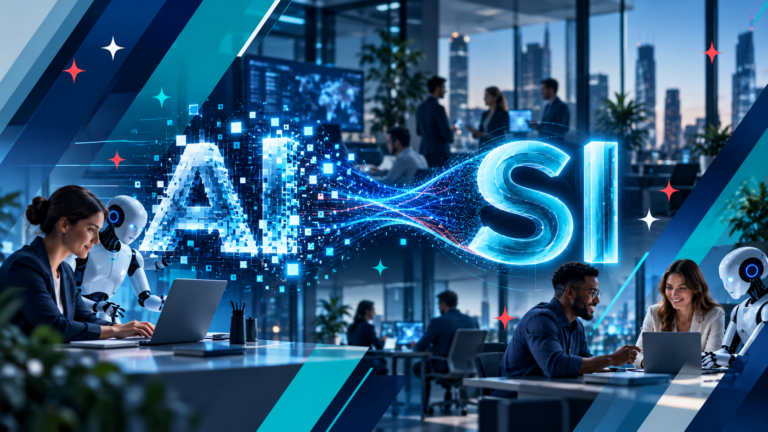
Vibe coding. Sounds mysterious, right? Behind the catchy name lies a fascinating shift in how people approach programming. You know the stereotype of coding as a cold, mechanical process? Well, vibe coding flips that idea on its head. It’s about creativity, intuition, and flow. It’s the moment when code stops being just lines on a screen and starts feeling like an extension of your thoughts.
This blog discusses what vibe coding is, why it’s catching attention, and how it might transform the way you think about programming.
From No-Code to Vibe Coding
Vibe coding is about lowering the barriers to programming. Instead of requiring years of technical training or memorizing complex syntax, vibe coding uses AI-powered tools that allow you to build apps, websites, and digital products through natural language, creativity, and experimentation.
But how is vibe coding actually built? In simple terms, it works by combining big AI models with pre-made coding templates. The AI has already “learned” from millions of examples of code, so when you tell it what you want, it knows how to put the pieces together. Instead of you writing every line yourself, the AI fills in the heavy lifting while you guide the direction. You set the vibe, the AI writes the code.
Think of it like ChatGPT: you type “write me a cover letter,” “explain this in simple words,” or “plan me a healthy meal” and instantly get results. Vibe coding works the same way. You write in plain English “I want a website to sell handmade jewelry” or “build me an app where users can book yoga classes,” and the AI generates the code and design.
A powerful example comes from Lovable, a Stockholm-based AI platform that embodies vibe coding. In just 8 months, Lovable reached $100M in annualized revenue by enabling non-coders to launch real apps, websites, and even startups at lightning speed. One user with zero coding background built a functioning business in just 10 days and made $50K in revenue.
So, how can you get started? Begin small. Explore no-code and low-code platforms like Lovable, Bubble, or Glide. Play around by describing the kind of app or website you’d like to create, then tweak and refine as the AI builds it out. Don’t worry about being “perfect”, the key is to stay curious and keep iterating. Over time, you’ll find yourself moving from beginner to builder, and from just having ideas to bringing them to life.
Why Vibe Coding is More Than a Trend
Vibe coding isn’t just about making life easier for beginners. It represents a bigger shift in how we think about building technology. For decades, coding was treated like a locked skill set, something you had to study for years before you could create anything meaningful but vibe coding breaks that wall down.
Garry Tan, CEO of Y Combinator, put it simply: “You can just talk to the large language models and they will code entire apps… and if it doesn’t… if there’s a bug, or if you want it to change… you don’t have to… go in there and write the code yourself.” His point highlights how AI enables small teams to build software quickly, without the heavy load of traditional coding.
Thomas Dohmke, CEO of GitHub, took it even further, saying: “Use AI or quit coding”, a statement that sparked widespread discussion about AI’s place in the future of coding. Together, voices like Tan and Dohmke show that adopting AI tools is essential for anyone in software development.
At the same time, vibe coding doesn’t mean skipping fundamentals. No matter how perfect AI-generated code may look, you still need to review it. It can contain errors, security gaps, or simply not do exactly what you asked for. It’s tempting to be lazy and trust the machine, but checking the code is what makes the difference between a quick demo and a reliable product. That habit – testing, reviewing, improving – is where real Software Developers grow.
Wawiwa Tech: Preparing the Workforce for the AI Era
Wawiwa is a global tech education provider, offering AI-proof reskilling programs and upskilling courses tailored to the latest industry trends.
At Wawiwa, we see AI as a powerful enabler rather than a threat. It’s a great tool to boost productivity, creativity, and innovation. When used right, AI helps people grow faster and contribute more meaningfully to their roles.
We do not only teach AI, we also breathe AI. We incorporate AI everywhere we can – into all our training offerings, teaching methods, and internal processes – to keep up with industry trends and meet the ever-changing demands of our partners and students around the world. At Wawiwa, everybody is expected to use AI to do their job better and faster.
We’ve also integrated AI modules into all of our tech reskilling programs to train students on the transformative power of Generative AI and meet the growing demand for AI skills from employers. We provide hands-on experience with AI tools that professionals use in every tech field. Learners gain practical skills in applying AI for coding, data analysis, problem-solving, and more, ensuring they are job-ready right after graduation.
In addition, we offer dedicated AI and Software Development upskilling courses, among others, designed to equip professionals with advanced, hands-on experience in cutting-edge tools and techniques, empowering them to stay competitive, innovate, and lead in their industries.
If you don’t understand software development, you can’t properly check what vibe coding produces. And that’s ten times worse than writing code yourself, because AI can make subtle mistakes that look “perfect” on the surface but actually lead to bugs, security risks, or even complete product failures. Without the skills to review and correct it, those errors can slip through unnoticed and cause big problems later.
While AI tools can speed up coding and even make development feel effortless, Software Developers are still needed to design systems responsibly, ensure security, and bring critical thinking to every project. At Wawiwa, our instructors guide learners to use AI as an accelerator of their skills. This balance ensures that graduates leave our programs ready to innovate with AI – while still carrying the human judgment, ethics, and expertise that technology alone cannot provide.