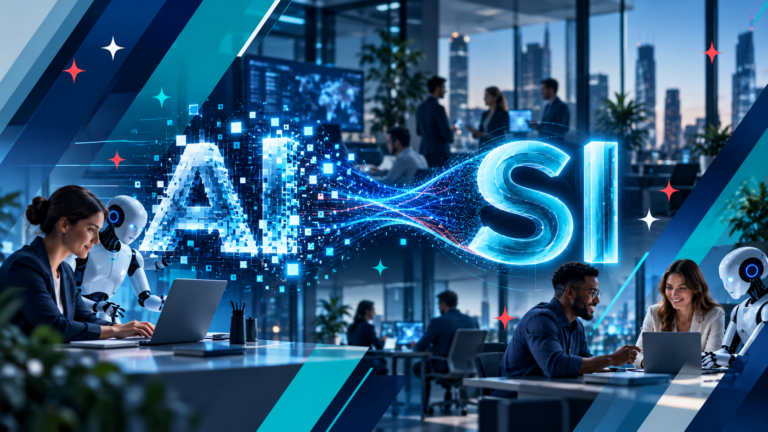
Most internships used to start with the same kinds of tasks: meeting notes, first drafts, research, and QA. Those building blocks taught attention to detail, discipline, and how work gets done inside an organization. AI now does most of that work better, cheaper, and at any hour. For employers and education leaders, the immediate question is: What is the purpose of an internship when the tasks that defined it are automated?
According to the World Economic Forum, 40% of employers expect to reduce their workforce where AI can automate tasks. At the same time, McKinsey reports that 34% of employees expect to use generative AI for more than 30% of their work tasks within a year.
For internships, that creates a challenge: employers may need fewer interns, while future employees still need opportunities to learn how real work gets done. Internships therefore need to create value in new ways – for both the intern and the employer.
This blog explores what should change, what should stay, and how internships can be redesigned so interns build relevant skills while giving employers a clear reason to bring them into their teams.
AI Has Automated the Classic Intern Task List
Most traditional intern tasks map neatly to AI strengths: summarizing, organizing, transcribing, drafting, reformatting, and basic analysis. AI tools can now extract insights from large documents, draft content in a company’s style, propose tags or categories, and create starter spreadsheets with pivot-ready columns. In many roles, using AI for these first-pass tasks is becoming part of the expected workflow.
That sounds like an intern replacement. It should not be. It is an intern amplifier.
If AI handles the grunt work, interns can spend more of their time on higher-value tasks: framing the problem, questioning assumptions, working with stakeholders, validating outputs against real-world context, and proposing actions. These are the experiences that build judgment and practical skills while creating more meaningful value for employers.
One caveat: none of this works if interns arrive AI-illiterate. Basic skills in prompting, finding the right information, and using AI safely are quickly becoming a baseline expectation. Programs like AI for Everyone help non-technical people build that comfort so they can contribute on day one.
How AI Is Reshaping Internships and Entry-Level Talent Pipelines
If internships only give people tasks that AI can easily automate, they won’t help build strong future employees. Tasks disappear, touchpoints shrink, and new graduates struggle to prove capability beyond a resume. The World Economic Forum has already flagged the trend: entry-level jobs in the U.S. have fallen by 35%, with routine task execution shifting to AI.
The unintended consequence is a scarcity of meaningful early-career experience just as organizations need AI-augmented contributors. Employers risk a gap between AI-enabled processes and the human talent required to guide them: prompters who understand the business, analysts who verify outputs, and coordinators who keep humans, data, and AI in sync.
Internships should fill that gap. They are a low-risk, high-feedback environment to build human-plus-AI skills. That only happens if we redefine the work.
Redefining Internships Around Human-Plus-AI Capabilities
Treat AI like the intern’s first teammate.
What that looks like in practice:
- Frame the task: translate a business goal into a clear prompt with constraints, edge cases, and definitions.
- Run and compare: generate, vary, and benchmark outputs from multiple tools, then choose what to trust.
- Validate with data: check for hallucinations, reconcile with source documents, and document citations.
- Decide and act: convert outputs into next steps, messages, or artifacts the business can use.
- Govern the process: apply privacy, security, and attribution guidelines.
This reframing aligns with how knowledge work is changing. As McKinsey notes, a growing share of day-to-day tasks is poised to be AI-supported, which elevates the importance of critical thinking, communication, and responsible use.
What Interns Should Do Now: A Role-By-Role Map
Marketing: Instead of writing 20 social captions from scratch, an intern should build a prompt library by audience and tone, generate variants, A/B test subject lines, and assemble a content performance brief with channel-level recommendations. They should document the prompts, data sources, and key decisions so the process can be reused and improved.
Data Analysis: Rather than manually cleaning CSVs all week, an intern should use AI to help organize and clean data, identify unusual patterns, and prepare an initial summary of the findings. They should then verify the results, check for errors, and explain what the data may mean for the business. A program like AI Data Analyst prepares people to use common tools responsibly and present findings that managers can act on.
Software Development: If code-assist tools handle more of the boilerplate, the intern should focus on small features, writing tests, reviewing code, and understanding architecture and tradeoffs. They should also learn how to guide AI tools effectively and validate the code they produce. For people on a development track, the AI Full-Stack Developer Program builds these skills through hands-on work with AI-assisted coding, testing, debugging, version control, and real-world full-stack development.
Across roles, the pattern repeats: let AI propose, let interns verify, and then let interns decide what moves the work forward.
Managing AI-Enabled Internships: Guardrails, Tooling, and Metrics
Internships rise or fall on supervision. Managers do not need to be AI experts, but they do need a simple playbook.
- Tool access and boundaries: specify what tools are approved, what data can be used, and how to handle sensitive information. Start with internal knowledge bases and safe sandboxes.
- Prompts and provenance: require prompt logs and citations. Ask interns to document what they asked, what came back, and what changed.
- Quality gates: define when to switch from AI output to human review. For example, any external-facing content or numbers informing decisions must be reviewed by a designated owner.
- Measurable outcomes: grade the work on business impact, not volume. Track cycle time reduced, accuracy improvements, stakeholder satisfaction, and reusability of assets like prompt libraries.
Managers benefit from concise, practical upskilling that turns AI from mystery to method. Programs like AI and Data for Managers help leaders set guardrails, assign the right work, and coach effectively in an AI-first environment.
Building Pathways From Classroom to Internship to Hire
If AI has changed the first rung on the ladder, colleges, universities, and training centers must change how they prepare students to step on it.
Three design choices help:
- Stackable credentials: short, job-relevant learning that feeds into longer programs, so students can gain AI literacy, then specialize in analysis, development, or business enablement.
- Hands-on projects with AI: every capstone should include AI-augmented deliverables with documented prompts, validation steps, and business metrics.
- Employer-aligned outcomes: co-design rubrics with HR and hiring managers so interns present the evidence that matters.
Institutions can partner to accelerate this shift with proven, market-driven offerings. See how to offer career pathways in AI and tech with stackable, job-ready programs at your college.
How Wawiwa Helps Colleges and Employers Adapt Internships for the AI Era
Internships are not going away. The busywork is. That is an opportunity to create better early-career experiences that build judgment, speed up learning, and deliver business value. AI can handle the repetitive work. Interns should focus on applying judgment, understanding context, and turning AI outputs into useful actions.
Wawiwa is a global education provider that supports colleges, universities, and training centers across the U.S. and around the world with education solutions built for the AI era. We help education providers and employers design industry-aligned, instructor-led, hands-on AI learning that maps directly to the work interns and new hires will do. With our JET Design™ methodology and stackable, job-ready programs across technical and business roles, partners can launch AI programs and courses quickly and confidently, and ensure that internships are pathways to employability. If your institution or enterprise is ready to modernize internships and early-career pathways, we are here to help.