
In a recent Wawiwa webinar held on January 21st, 2025, we explored Europe’s tech talent shortage, highlighting how low birth rates impact student enrollment and the workforce, and how attracting international students can help fill tech jobs in high demand. We discussed reskilling, upskilling, and the role of employability in student mobility, sharing practical tips for governments, universities, and training centers to attract and retain international students.
Watch the Webinar recording now!
The Speakers

Dr. Janet Ilieva, Founder and Director at Education Insight
Janet is an economist with 20 years of international experience in education research and policy analysis, specializing in global student mobility and transnational education. Her evidence-based research informs strategies for governments, universities, and international organizations, driving policies that shape the global higher education landscape.

Lucas Cepero, Founder and Director at International Council of Education (ICEDU)
Lucas specializes in international education and he collaborates with institutions to foster cross-border partnerships, enhance educational access, and support talent development. Lucas is committed to shaping strategies that attract international students and address the evolving demands of the workforce.

Leah Mansoor, VP Business Development at Wawiwa Tech
Leah has over 15 years of experience in global business development and in running international operations. She has led the setup of new business units, built strategic partnerships, and refined market strategies. Leah is passionate about fostering cross-cultural collaboration and driving international growth in education and business.
Dr. Janet Ilieva, Founder and Director at Education Insight
Janet is an economist with 20 years of international experience in education research and policy analysis, specializing in global student mobility and transnational education. Her evidence-based research informs strategies for governments, universities, and international organizations, driving policies that shape the global higher education landscape.
Lucas Cepero, Founder and Director at International Council of Education (ICEDU)
Lucas specializes in international education and he collaborates with institutions to foster cross-border partnerships, enhance educational access, and support talent development. Lucas is committed to shaping strategies that attract international students and address the evolving demands of the workforce.
Leah Mansoor, VP Business Development at Wawiwa Tech
Leah has over 15 years of experience in global business development and in running international operations. She has led the setup of new business units, built strategic partnerships, and refined market strategies. Leah is passionate about fostering cross-cultural collaboration and driving international growth in education and business.
The Impact of Low Birth Rates on Europe’s Student Enrollment and Workforce
Europe is facing a demographic decline, with birth rates lower than what is needed for a stable population. This trend has a direct impact on student enrollment and, in turn, the talent pool available for the workforce. The average birth rate in Europe is 9 per 1,000 people, almost a 6% decrease from 2022. It takes 12-13 births per 1,000 people to sustain a nation’s population. Below are some examles of European countries with extremely low birth rates.

Dr. Janet Ilieva, emphasized that this decline affects both higher education institutions and the labor market: “If we consider the United Nations data on 18-year-olds – those likely to enroll in university – we see that declines are likely to persist across major economies in Europe.” Janet pointed out that, apart from Turkey and Russia, no European country ranks among the top 20 globally in terms of the number of 18-year-olds, making it clear that Europe must look beyond its borders to sustain its workforce.
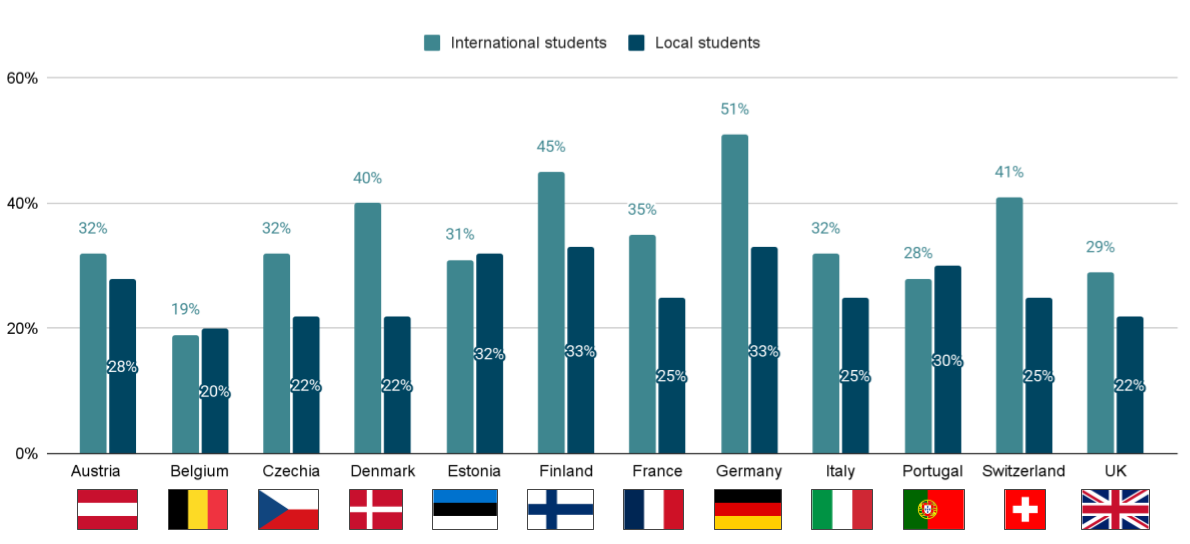
Additionally, the declining enrollment in STEM degrees is a key concern. In some European countries, less than 30% of students pursue STEM fields, while in non-European countries like China, this figure reaches nearly 50%. The panelists discussed that fewer students in STEM fields contribute to the shortage of tech professionals in Europe, reinforcing the urgency of attracting international students. According to data, international students are more likely to learn STEM degrees than local ones.
Reskilling and Upskilling to Tech: A Critical Need
While bringing in international students is part of the solution, reskilling and upskilling the existing workforce to tech jobs and skills is also important. As technology evolves rapidly, many professionals find their skills outdated, and there are still not enough opportunities for structured training programs to keep up with industry needs.
Leah Mansoor stressed the importance of continuous education: “You cannot just look at newcomers or younger students to fill the tech talent gap – you have to look at the existing workforce and how they can be adequately trained and fit into the job market of technology.” Leah highlighted that European companies need to prioritize tech reskilling and upskilling programs to help their employees keep their contribution capabilities.
The panelists pointed out that migration and workforce mobility within the EU play a role in shaping tech talent availability. With professionals moving to higher-paying countries or leaving Europe for better opportunities in places like the U.S., it becomes even more critical to invest in tech training programs that help professionals adapt to the fast-changing digital landscape.
Employability as a Key Factor in Student Mobility
One of the strongest motivations for international students to study abroad is the promise of employment opportunities. Higher education institutions that offer strong post-study work opportunities tend to attract more international students, as they prioritize career prospects when choosing a destination.
Dr. Janet Ilieva pointed out the impact of employability on student decisions: “Post-study work opportunities are a huge driving factor. Countries like the UK saw a plateau in international student demand when they discontinued post-study work visas, but after reintroducing them, demand skyrocketed.” She emphasized that students are looking for programs that not only provide quality education, but also clear pathways to employment.
Countries that enable international students to gain work experience post-graduation will have a higher chance of retaining this talent and addressing the lack of talent. European countries that will host the most tech talent will have the strongest economies in the Digital and AI era.
Practical Tips for Universities and Training Centers to Attract International Students
To attract and retain international students, universities and training centers must adapt to the changing education landscape. The webinar provided valuable insights into what educational institutions can do to make themselves more attractive to international talent.
- Expand Flexible Learning Options: Institutions should consider multiple intakes throughout the year instead of sticking to the traditional September start. Modular learning, blended education, and micro-credentials can appeal to a wider range of students.
- Strengthen Industry Partnerships: Collaboration between universities and tech companies ensures that programs remain relevant to market needs. Lucas Cepero emphasized, “If we don’t communicate with the industry, we risk training students for jobs that no longer exist.” Practical, industry-aligned programs can help bridge this gap.
- Enhance Work Opportunities for Students: Governments and institutions must ensure international students have access to internships, co-op programs, and post-graduation work permits. Germany has taken steps to streamline visa processes for tech talent, setting a strong example for other European nations. Canada is doing the same in North America
- Improve Support Services for International Students: Beyond academics, institutions should focus on providing affordable housing, visa assistance, and career guidance to make their country a more attractive destination for students looking to build a future in tech.