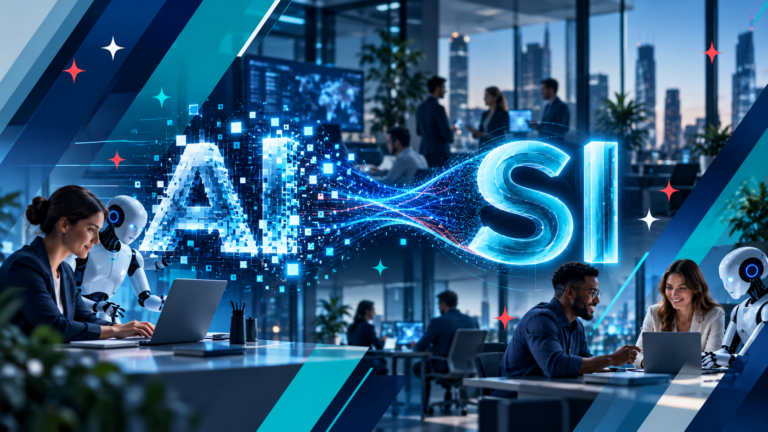
Everyone keeps telling you to “add AI to your CV” – but what does that even mean anymore? In what context? Where? How? More and more people are using AI – students to write, marketers to create, developers to code – yet few actually understand how to use it in a way that stands out. When intelligence is automated and creativity is crowdsourced, the question is who still knows how to think beyond AI. Maybe the rarest skill today isn’t knowing AI, but remembering how to be human in a world where most people use it the same way.
This blog discusses how AI is shifting from superpower to standard, changing what “skills” even mean. It explores why individuality, taste, and curiosity are becoming the new differentiators – and how, in an age where everyone has AI, standing out means showing what only you can bring to the table.
How AI Shortcuts Are Making Us Forget How to Think
MIT researchers found something striking: when students used ChatGPT to write essays, their brain activity significantly dropped – less creativity, less attention, less memory recall. Many couldn’t even remember what they’d written right after submitting it. Think about that. The tool designed to make us smarter might actually be making us forget how to think.
We’re wired to love shortcuts – they save time, boost productivity, and make us feel efficient. But the brain doesn’t grow through ease. Every time we skip the hard part, we skip the learning. Every polished AI-generated answer replaces a messy human process that once taught us how to reason, connect, and create.
The easier technology makes things, the more we risk losing the skills that make us human – focus, reasoning, and curiosity. We start mistaking speed for intelligence, and convenience for progress. But the truth is, struggle is where our brains come alive. Without that tension – the thinking, the effort, the wondering – we’re not evolving with AI. We’re quietly letting it evolve instead of us.
Everyone Has AI – So Now What?
We’ve reached the point where saying you “need to know AI” to stay employable feels almost redundant. Of course you do. That’s like saying you need Wi-Fi to work. Today, working with AI tools is a basic requirement in almost every profession – from marketing to software development to design. Employers now expect you to use AI but and to show your competency in the tools that matter to your role. If you can’t, someone else will. AI isn’t just a nice-to-have – it’s the new literacy. To stay relevant, you have to upskill fast.
AI tools are everywhere – many of them even free. You can write a polished blog, design a stunning presentation, or build an app before your coffee gets cold. Great. Now what?
When everyone has access to the same intelligence, creativity alone stops being a competitive advantage. The real edge lies in how you use AI – in the depth, originality, and strategy behind your prompts. Most people stop at surface-level convenience; few push it to its full potential.
The difference between average and exceptional is who understands AI. Don’t just ask AI to write your email – ask it to predict how your reader might react. Don’t just generate a design – ask it to unpack why it works psychologically. Don’t just summarize a report – ask it to reveal the hidden trend no one else noticed. The skill is knowing how to think with AI.
The New Intelligence: Thinking Beyond the Prompt
We used to be judged by what we knew. Then by what we could do. Now, it’s about how we think – how we connect dots, ask questions, and turn AI’s output into insight. The smartest people in the AI era won’t be the ones with the best prompts, but the ones who know what to do next with the answers they get.
AI can write poetry, code apps, and predict trends – but it can’t feel a spark of curiosity, sense irony, or imagine something absurdly new. That’s still our job. The future belongs to people who can blend human intuition with machine intelligence.
So maybe the next wave of intelligence isn’t artificial or human – it’s augmented. It’s the kind that questions, edits, and challenges AI instead of blindly accepting it. The kind that knows when to zoom out and say, “Wait – does this even make sense?” Because in the end, it won’t be AI that replaces you. It’ll be the human who knows how to think with it.
Wawiwa’s Approach: Using AI to Sharpen, Not Soften, the Mind
At Wawiwa, we believe in boosting brainpower with tech, not letting tech do the thinking for us. Sure, AI can write code, draft designs, or even plan a project – but if we don’t understand how it works, we can’t check its logic or fix its mistakes. Relying too much on AI can leave us smart on paper but clueless in practice. The future needs people who can think with AI, challenge it, and improve it.
That’s why at Wawiwa, we integrate AI tools into every program – like GitHub Copilot in our Full-Stack Developer Program and Midjourney or Adobe Firefly in our UX/UI Designer Program – but we never replace good-old brain-sweating education. Students learn the fundamentals first: programming logic, debugging, user-centric design, and critical thinking. Then they use AI to speed up, expand, and innovate – not to skip the process. For example, when code doesn’t run correctly, AI tools might suggest quick fixes that look right but don’t actually solve the problem. If you don’t understand the logic behind the code, you won’t know why it failed or how to fix it manually. The same goes for design: AI can create beautiful visuals in seconds, but if you can’t evaluate whether they fit user needs or accessibility standards, the result looks nice yet fails in real use.
Think of AI as a creative partner that accelerates your ideas. At Wawiwa, we train professionals who know how to use AI smartly – combining efficiency with depth, logic with imagination, and technology with humanity. Because in the AI era, it’s about thinking bigger, better, and bolder.