
So You Wanted to Be An Astronaut Too?!
How many of you dreamed about becoming an “astronaut” or “pilot” when you were little? Probably many more than those of us who actually grew up to cross the skies flying jet planes. It’s not a sad outcome really, it’s just highly unlikely that we have the exact, precise skill set required to make it. We are handed certain cards in life and we play them a certain way, which in turn, leads us to where we are now.
Nowadays the buzz is all about reskilling to tech professions. Following Covid-19, millions lost their jobs and are looking for a career change. At the same time, millions of available tech jobs await skilled candidates – software developers, cyber specialists, data analysts, and more.
Put it together and you get hundreds of thousands of people around the world heading towards training centers and online courses with the goal of reskilling for tech jobs. Many invest significant amounts of time and money towards their reskilling, despite the current financial difficulties. Unfortunately, not all will get to the finish line.
Not All People Have What it Takes to Become Successful Tech Professionals
Just like becoming an astronaut has high requirements and exacts a heavy toll on personal life, different tech jobs also require certain capabilities and personality traits. If you don’t have them, it will be hard to pass the training and there’s a good chance that you’ll drop out, as many do in tech studies.
This scenario is often a personal tragedy for students and an unfortunate outcome for training centers. Dropouts result in lost revenue for centers and resentment among fallouts, which can disparage an education center’s reputation.
What if you Could Know in Advance? Well, you can.
Surprisingly, technology and artificial intelligence have made it possible to ‘see into the future’ and predict whether a chosen tech career path is suitable for an individual. Pre-program assessments offer education centers the ability to make a well-informed appraisal about a candidate’s chance to succeed in a specific tech training program and future tech jobs.
* * *
Case Study: Wawiwa Tech Training’s Pre-Program Assessment
Wawiwa Tech Training, an education provider that partners with local centers around the world to reskill people for tech professions, uses pre-program assessments as a central component in its pedagogical model. Wawiwa’s assessment provides the local tech training centers with a proven tool that reduces dropout rates and accompanying revenue losses.
Wawiwa’s assessment is delivered as a 90-minute online test that candidates take either on-site or remotely, online. The test presents the candidate with questions that check a variety of attributes and skills deemed critical to success for specific tech professions. Results are based on the candidate’s scores in comparison to the general population.
The assessment leverages decades of tech training experience, over 50 years of accumulated HR data, and sophisticated artificial intelligence algorithms. The end result is an in-depth analysis of a candidate’s fit with specific tech training programs and respective tech professions.
Each career path requires different skills and personality traits, and accordingly, tests are also tailored to each program: for full-stack developers, front-end developers, cybersecurity specialists, UX/UI designers, online marketing specialists, product managers, and data scientists.
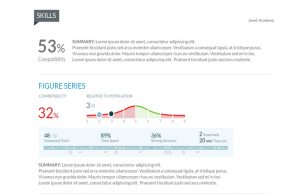 Following the test, Wawiwa’s platform yields a detailed assessment report. The report highlights the candidate’s competency in various areas ranging from mathematical comprehension, level of English (which is a common requirement for most tech jobs), and logic, to teamwork, self-control, originality, and emotional stability. Loyalty, integrity and resilience are also analyzed for professions dealing with sensitive materials, such as cybersecurity.
Eran Lasser, Founder and CEO of Wawiwa Tech Training, explains the importance of pre-program assessments. “Many times candidates are not fully aware of their own strengths and weaknesses. They often sign up to tech training hoping to land a high-paying job, without knowing what it takes to succeed. Professional success, however, isn’t just about academic abilities, but rather depends on many other traits and skills, like passion, teamwork, collaboration, and communication. Some skills can be taught or improved, while others cannot. Pre-program assessments are our way to match individual students with the program best suited to them. We’ve developed a unique assessment methodology that yields unprecedented results in terms of program completion rates and successful job placements for graduates.”
* * *
Advantages of Pre-Program Candidate Assessments
Wawiwa’s pre-program assessments help training centers provide candidates with insightful career counseling, guiding them towards a profession that suits their skills. This, in turn, results in greater student satisfaction – from the training program itself and, later, from their career.
The assessment also gives training center operators an additional tool to direct the right candidates to the right courses. This lowers dropout rates and revenue losses, and increases graduate employability and employer satisfaction. Overall, the center’s positioning and reputation strengthens as a reliable source for local tech talent.
Having dreams of a better future is definitely important, but not always enough. Data-driven assessments help candidates and training centers find the most-likely path to success, transforming some dreams into a reality.