KI entwickelt sich schnell. Wirklich schnell. Kaum hat man sie für jede erdenkliche Arbeitsaufgabe genutzt, versuchen Unternehmen im nächsten Moment, ganze Arbeitsabläufe und Automatisierungen mit KI neu zu gestalten. Unternehmen suchen jetzt nach Leuten, die KI tatsächlich im Unternehmen zum Laufen bringen können.
Da Spezialisten für die Implementierung von KI in Unternehmen Kommen Sie herein. Fachleute in dieser neuen und aufstrebenden Rolle helfen Unternehmen, KI in tatsächlichen Geschäftswert zu verwandeln.
In diesem Blog wird besprochen, was Enterprise AI Implementation Specialists tatsächlich tun, warum Unternehmen sie brauchen und warum Universitäten, Hochschulen und Schulungszentren Menschen für diesen neuen, gefragten Beruf weiterbilden sollten.
Was machen Spezialisten für KI-Implementierung in Unternehmen?
Enterprise AI Implementation Specialists integrieren KI in die Geschäftsprozesse eines bestimmten Unternehmens. Ihre Rolle liegt zwischen Technologie und Wirtschaft – sie verstehen, wie KI Arbeitsabläufe verbessern, Zeit und Geld sparen, menschliche Aufgaben automatisieren und die Entscheidungsfindung unterstützen kann. Mehr als alles andere sind sie Veränderer – sie implementieren Innovationen in oft konservativen Unternehmensumgebungen. Ihr Ziel ist einfach: KI im Unternehmen nützlich, nutzbar und wirkungsvoll zu machen.
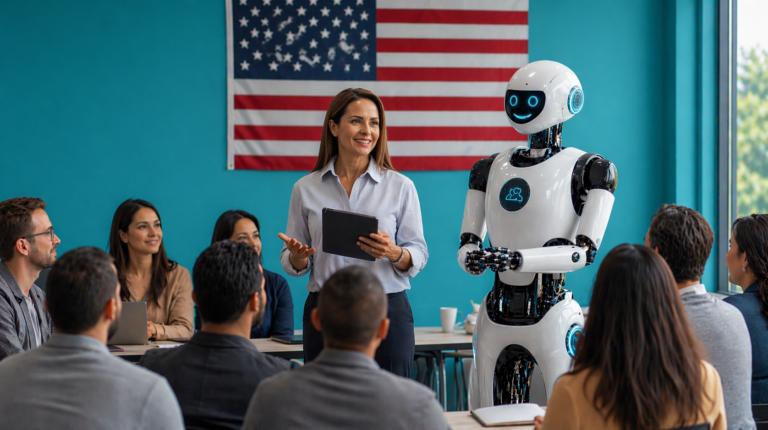
In einem typischen Unternehmen verbringen Mitarbeiter jeden Tag Stunden damit, Kundenanrufe manuell zusammenzufassen, Berichte zu schreiben oder repetitive Supportfragen zu beantworten. Ein Enterprise AI Implementation Specialist kann KI-Tools einführen, die diese Prozesse automatisieren, Teams in deren Anwendung schulen und Arbeitsabläufe auf die Fähigkeiten von KI umgestalten. Ziel ist es nicht, über Nacht alle durch Roboter zu ersetzen – entgegen dem, was Science-Fiction-Filme uns vor Jahren versprochen haben –, sondern Organisationen dabei zu helfen, mit KI intelligenter und schneller zu arbeiten.
Als KI vor einigen Jahren weit verbreitet wurde, experimentierten die meisten Unternehmen nur mit ein paar Werkzeugen. Jemand öffnete ChatGPT, generierte Inhalte, testete einen KI-Bildgenerator, automatisierte vielleicht eine kleine Aufgabe, und das reichte aus, um sich innovativ zu fühlen. Aber jetzt verschiebt sich das Gespräch. Unternehmen fragen sich: "Wie integrieren wir KI tatsächlich skalierbar, sicher und nützlich in das Unternehmen?"
Und der Zeitpunkt ist kein Zufall. Laut dem Weltwirtschaftsforum KI und Automatisierung werden voraussichtlich 92 Millionen Arbeitsplätze verdrängen und gleichzeitig 170 Millionen neue schaffenEnterprise AI Implementation ist einer der neuen Karrierewege, die sich aus diesem Wandel ergeben, da Unternehmen zunehmend nach Fachleuten suchen, die ihnen helfen können, sich an das KI-Zeitalter anzupassen.
Unternehmen suchen nach Fähigkeiten zur KI-Implementierung
Organisationen erwarten zunehmend, dass Mitarbeiter KI-Tools bedienen, Aufgaben automatisieren, Informationen schneller analysieren und sich an neue Arbeitsabläufe anpassen können. Aber die Herausforderung ist weitaus größer als das reine „Nutzen von KI“. Viele Unternehmen wissen immer noch nicht, wie sie KI tatsächlich praktisch, skalierbar und nützlich in ihrem gesamten Unternehmen implementieren können.
Einige Unternehmen experimentieren mit wenigen KI-Werkzeugen, haben aber Schwierigkeiten, KI-Workflows zu erstellen. Andere wissen nicht, welche Prozesse automatisiert werden sollten, welche KI-Werkzeuge ihren Bedürfnissen entsprechen, wie KI in bestehende Abläufe integriert werden kann oder wie Mitarbeiter diese neuen Technologien tatsächlich annehmen können. In vielen Fällen bleiben KI-Initiativen in der „coolen Demo“-Phase stecken, ohne eine sinnvolle operative Auswirkung zu erzielen.
Und aus Sicht der Mitarbeiter kann die Schicht überwältigend sein. Jemand mag hervorragend in Datenanalyse, Betrieb, Marketing, Kundensupport oder Projektmanagement sein, aber plötzlich ändert sich die Art und Weise, wie die Arbeit erledigt wird, und Arbeitsabläufe werden zunehmend von KI angetrieben. Für viele Mitarbeiter kann es sich anfühlen, als würde sich der Boden unter ihren Füßen verschieben.
Deshalb sind auf KI-Implementierung spezialisierte Berater wertvoll. Unternehmen benötigen Menschen, die Geschäftspotenzial und KI-Fähigkeiten verknüpfen können – Fachleute, die interne Abläufe verstehen, Chancen identifizieren, KI-Lösungen implementieren und mithilfe von KI-Tools Geschäftstransformationen einleiten.
Universitäten, Hochschulen und Ausbildungszentren können eine Rolle in der KI-Ära spielen
Der Bedarf an KI-Implementierungsspezialisten betrifft sowohl Unternehmen als auch Bildungseinrichtungen. Da Unternehmen zunehmend KI in ihre Geschäftsabläufe integrieren, benötigen sie verstärkt Fachleute, die die Implementierung innerhalb des Unternehmens vorantreiben können.
Dies schafft Bedarf für eine neue Art von Karriere-orientiertem Schulungsprogramm. Bildungseinrichtungen können praxisorientierte Programme anbieten, die speziell für die Rolle der Implementierung von Enterprise AI konzipiert sind. Diese Programme sollten Fachleute darauf vorbereiten, KI-Möglichkeiten innerhalb von Organisationen zu identifizieren, Arbeitsabläufe neu zu gestalten, KI-Lösungen zu implementieren, die Akzeptanz in Teams zu unterstützen und Unternehmen dabei zu helfen, KI auf skalierbare und verantwortungsvolle Weise zu integrieren.
Die Zielgruppe für diese Programme ist breit gefächert. Einige Lernende kommen möglicherweise aus den Bereichen Wirtschaft, Betrieb, Projektmanagement oder Datenwissenschaft und möchten in eine KI-fokussierte Karriere wechseln. Andere kommen möglicherweise aus Technologieabteilungen oder aus ganz anderen beruflichen Hintergründen ohne jegliche Vorkenntnisse im Technologiebereich, möchten sich aber für eine neue Rolle im Zeitalter der KI umschulen lassen. In anderen Fällen können Unternehmen bestehende Mitarbeiter entsenden, um sie im Rahmen ihrer KI-Transformationsstrategie für interne KI-Implementierungsrollen umzuschulen.
Für Universitäten, Hochschulen und Ausbildungszentren bietet sich hier die Gelegenheit, ein neues karriereorientiertes Programm zu starten, das Menschen zu Spezialisten für die Implementierung von Enterprise AI umschult.
Schüler auf die KI-Ära mit Wawiwa Tech vorbereiten
Wawiwa unterstützt Universitäten, Hochschulen und Ausbildungszentren in den USA – und weltweit – mit Bildungslösungen, die für das KI-Zeitalter entwickelt wurden. Als globaler Anbieter von Technologiebildung bietet Wawiwa KI-sichere Umschulungsprogramme und Weiterbildungskurse entwickelt, um Branchentrends und Arbeitgeberbedürfnissen zu entsprechen.
Wawiwas Programm für Spezialisten für die Implementierung von Unternehmens-KI – ein 4-monatiges, 200-stündiges Trainingsprogramm soll Studenten auf eine der aufkommenden Karriererollen des KI-Zeitalters vorbereiten. Es sind keine Vorkenntnisse erforderlich, dennoch konzentriert sich das Programm auf genau die Art von praktischer Erfahrung, die Arbeitgeber bei der Einstellung von Kandidaten suchen.
Das Programm schult Studierende darin, geschäftliche Anforderungen in praktische KI-Lösungen zu übersetzen, KI-Implementierungsprozesse zu leiten und KI-Workflows zu entwerfen und zu optimieren, die organisatorische Auswirkungen erzielen. Studierende lernen, Chancen für KI in Unternehmen zu identifizieren, Lösungen zu implementieren und KI-Systeme in Geschäftsumgebungen kontinuierlich zu verbessern.
Im Rahmen des Abschlussprojekts erstellen die Studierenden einen vollständigen Plan für die Implementierung von KI in Unternehmen – von der Diagnose des organisatorischen Bedarfs und der Identifizierung von wirkungsvollen Möglichkeiten bis hin zum Entwurf der Lösungsarchitektur und der Implementierungsroadmap. Die Studierenden entwickeln außerdem einen funktionierenden Prototyp, wie z. B. eine Automatisierung, einen KI-Assistenten oder einen agentenbasierten Workflow, und definieren dabei Governance-, Sicherheits- und operative Aspekte.
Das Projekt schließt mit einer Präsentation auf Managementebene und einer Live-Demo ab, bei der die Studierenden ihre Lösung vorstellen, die erwarteten geschäftlichen Auswirkungen erläutern und ein klares ROI-Modell mit messbaren Erfolg-KPIs aufzeigen. Diese Art von praktischer Erfahrung ist genau das, was Arbeitgeber bei der Rekrutierung von Talenten zunehmend schätzen.